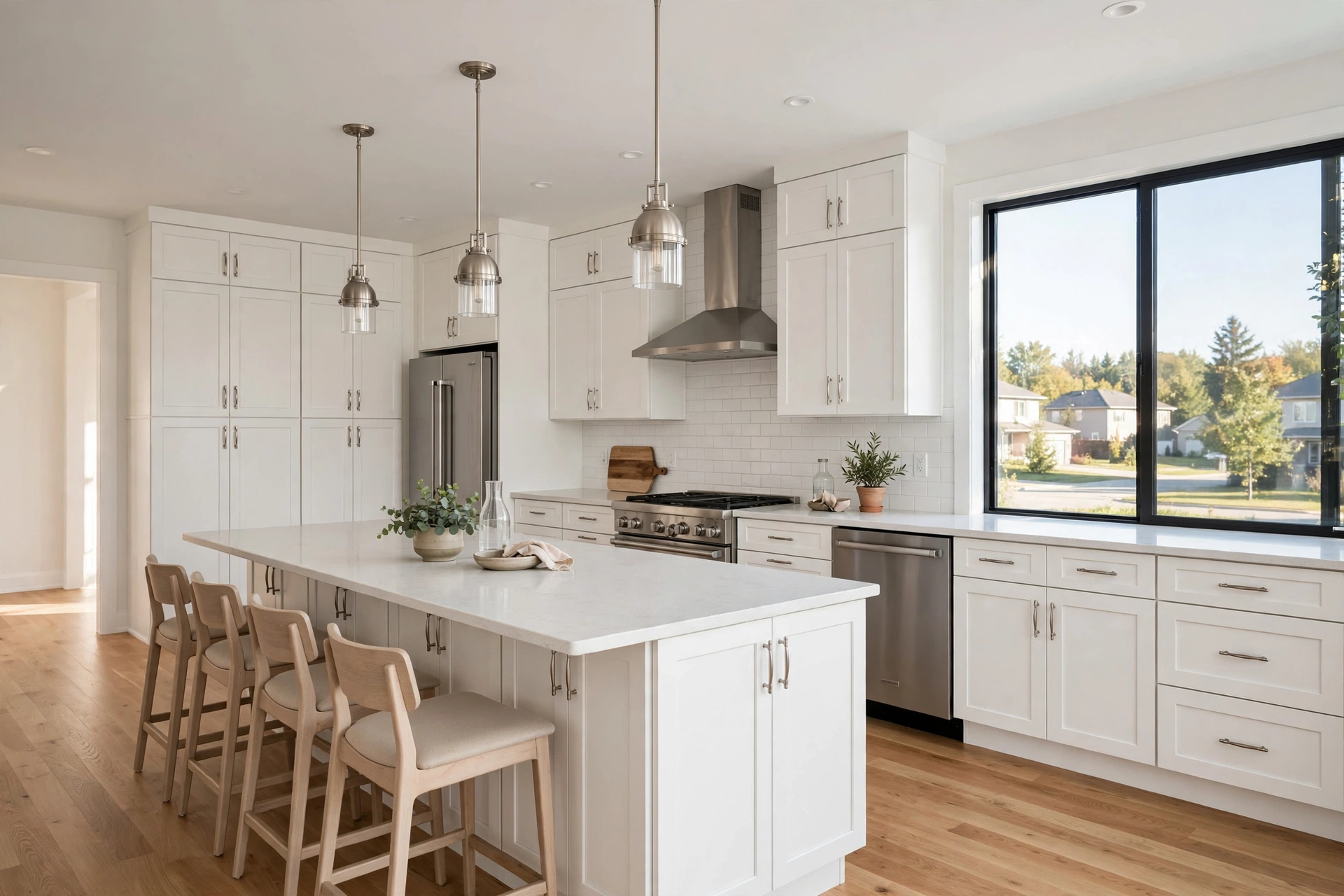
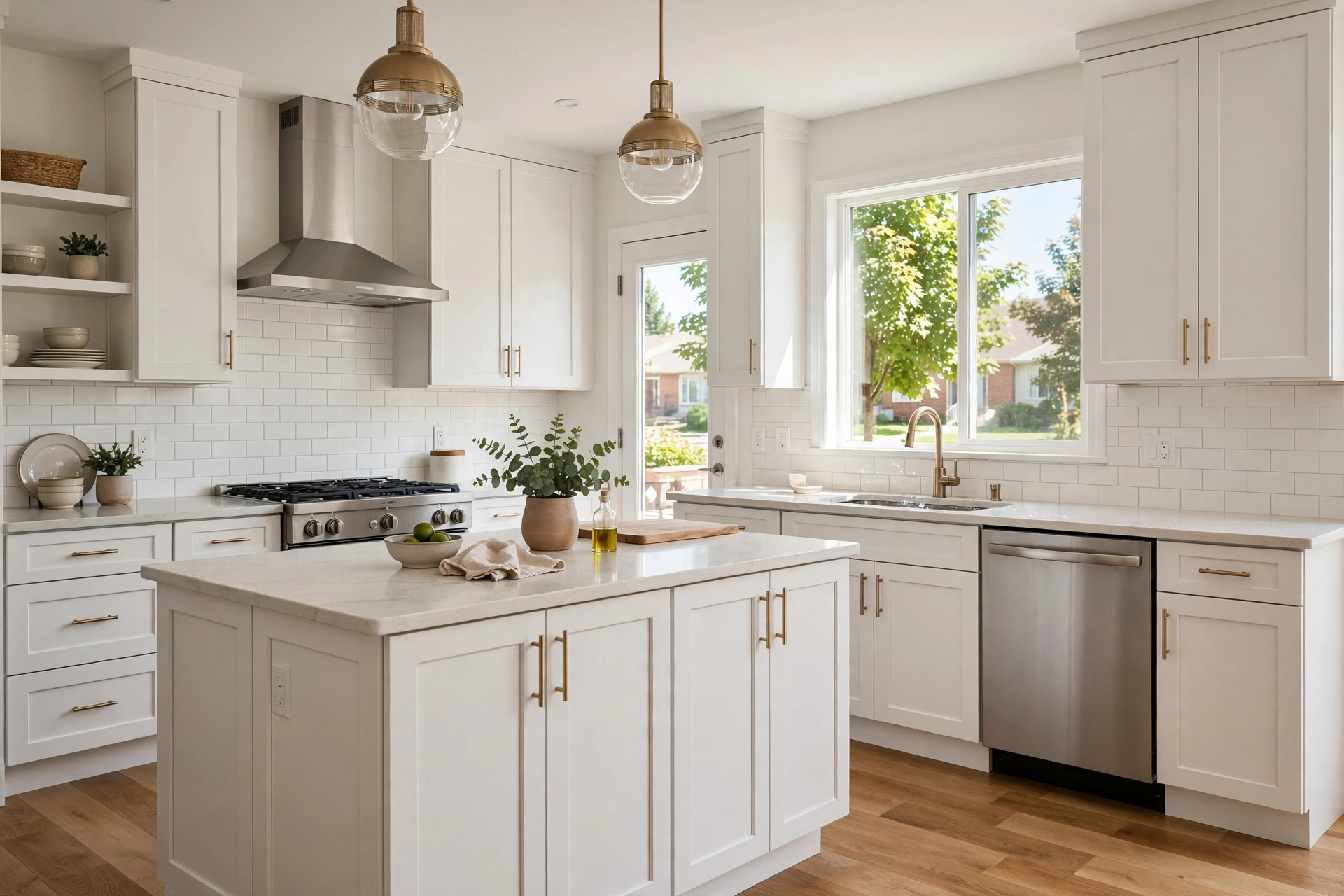
Builder-Grade to Custom: Upgrading Cabinets in New Audley Homes
If you bought a new home in Audley, in Ajax's north end, you already know the pattern. The house itself is generous — detached, three or four-plus bedrooms, an open-plan main floor around Audley Road, Williamson Drive, and Rossland Road — and the kitchen looked perfectly fine in the builder's model. Then you moved in and started actually cooking in it. The uppers stop short of the ceiling. The corner cabinet swallows things. The drawers are shallow, and the doors close with a clack you can hear in the next room.
That gap between a big, well-built house and a basic kitchen is not a defect in your home. It is how new subdivisions are priced: the builder's standard kitchen is built to a price, in standard sizes, from a short list of finishes. The good news is that Audley's problem is the opposite of the one in Ajax's older, smaller kitchens. Your constraint is not footprint — the room is there. It is taste and function, and both of those can be upgraded in stages, without tearing out a nearly new kitchen on day one.
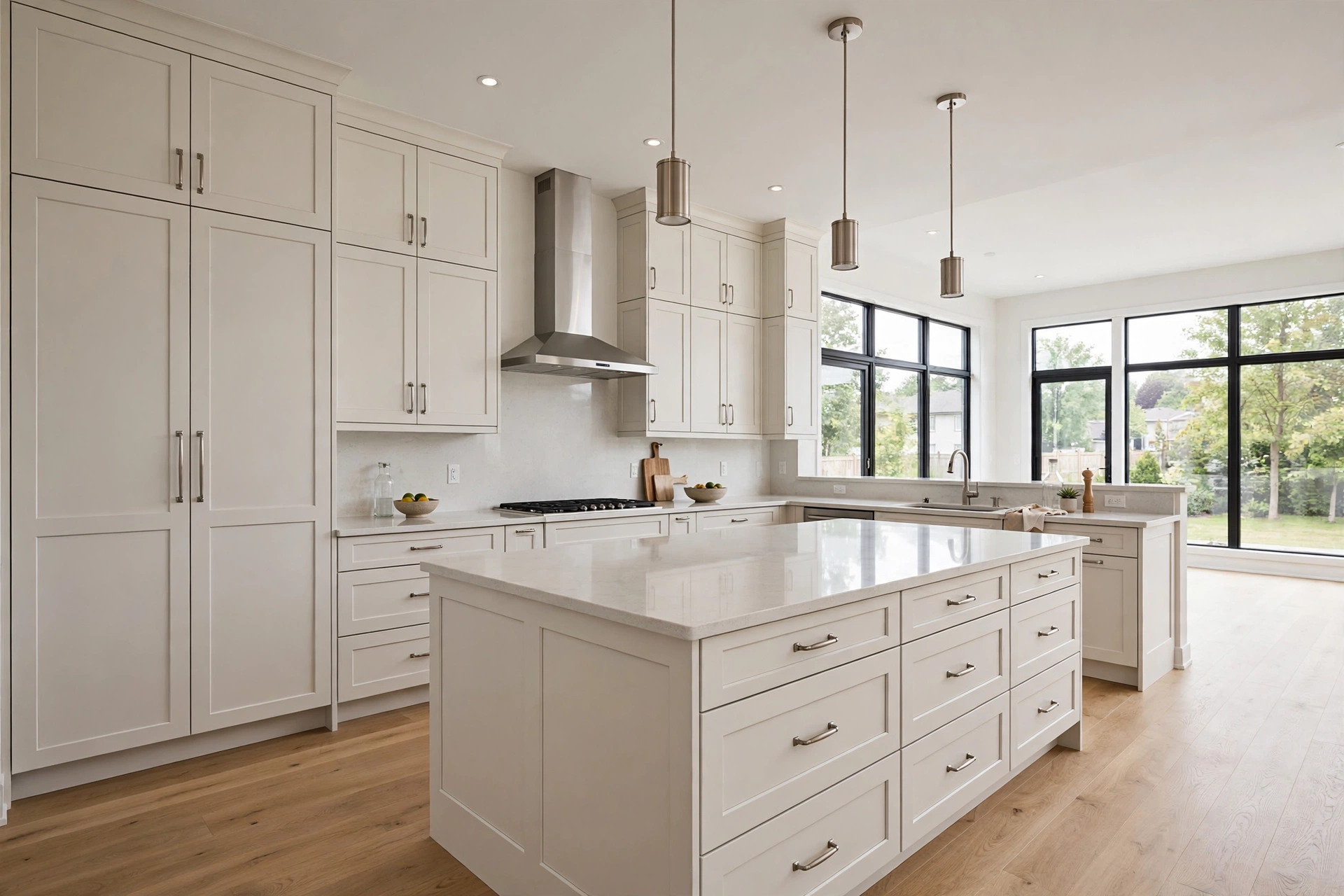
What "Builder-Grade" Actually Means in a Post-2000 Ajax Build
Builder-grade is not a warning label; it describes how the cabinets were chosen. Understanding the recipe tells you exactly what an upgrade can change.
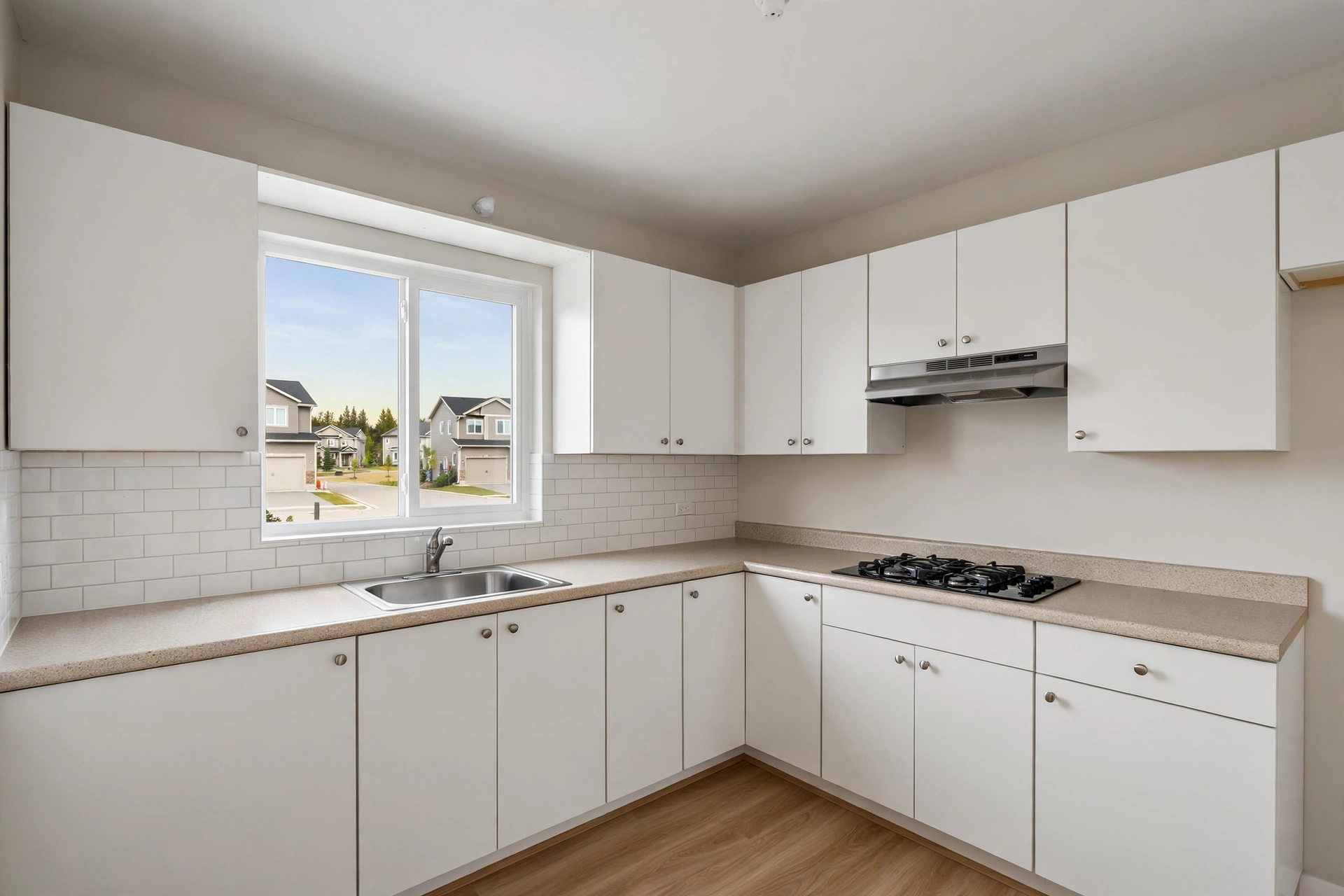
Stock boxes, in stock sizes. The cabinets come in fixed widths and depths from a catalogue, fitted into your kitchen with filler pieces where the room and the sizes do not match. The boxes are commonly particleboard or a particleboard-and-plywood mix, assembled for speed. They do their job — they just were not made for your room or how you cook.
Limited doors and finishes. A short menu of door styles and colours, chosen to photograph well and offend nobody. If your whole street picked from the same menu, your kitchen probably looks a lot like your neighbours'.
Standard-height uppers. This is the most visible tell in an Audley home with nine-foot ceilings: the wall cabinets stop at a standard height, leaving an open gap above them that collects dust and wastes a full tier of storage in a house that otherwise uses its height well.
Basic hardware and interiors. Small knobs, standard hinges without soft-close, fixed shelves instead of drawers, and plain interiors — a bare corner cabinet, an empty sink base, no cutlery or tray organization beyond what you add yourself.
None of this means the kitchen has to be replaced wholesale. In a post-2000 home the bones around the cabinets — the room, the plumbing and electrical positions, the layout — are usually sound and current. That is why a staged upgrade works so well here, where it would not in an older kitchen that needs everything at once.
Upgrade in Stages: What Each Stage Can and Can't Fix
Most Audley owners do not need a single, full replacement project. They need the right stage, in the right order. Here is how the stages break down, honestly.
Stage one: doors and hardware. New doors and drawer fronts, matched handles, and soft-close hinges can change the entire look and feel of the kitchen while the existing boxes stay. This stage fixes style, colour, and the daily clatter. It cannot fix storage: if the boxes lack drawers or waste the corner, new doors dress up the same frustrations. It also depends on the boxes being sound — worth checking at the sink base, where leaks do their quiet damage, before spending on fronts.
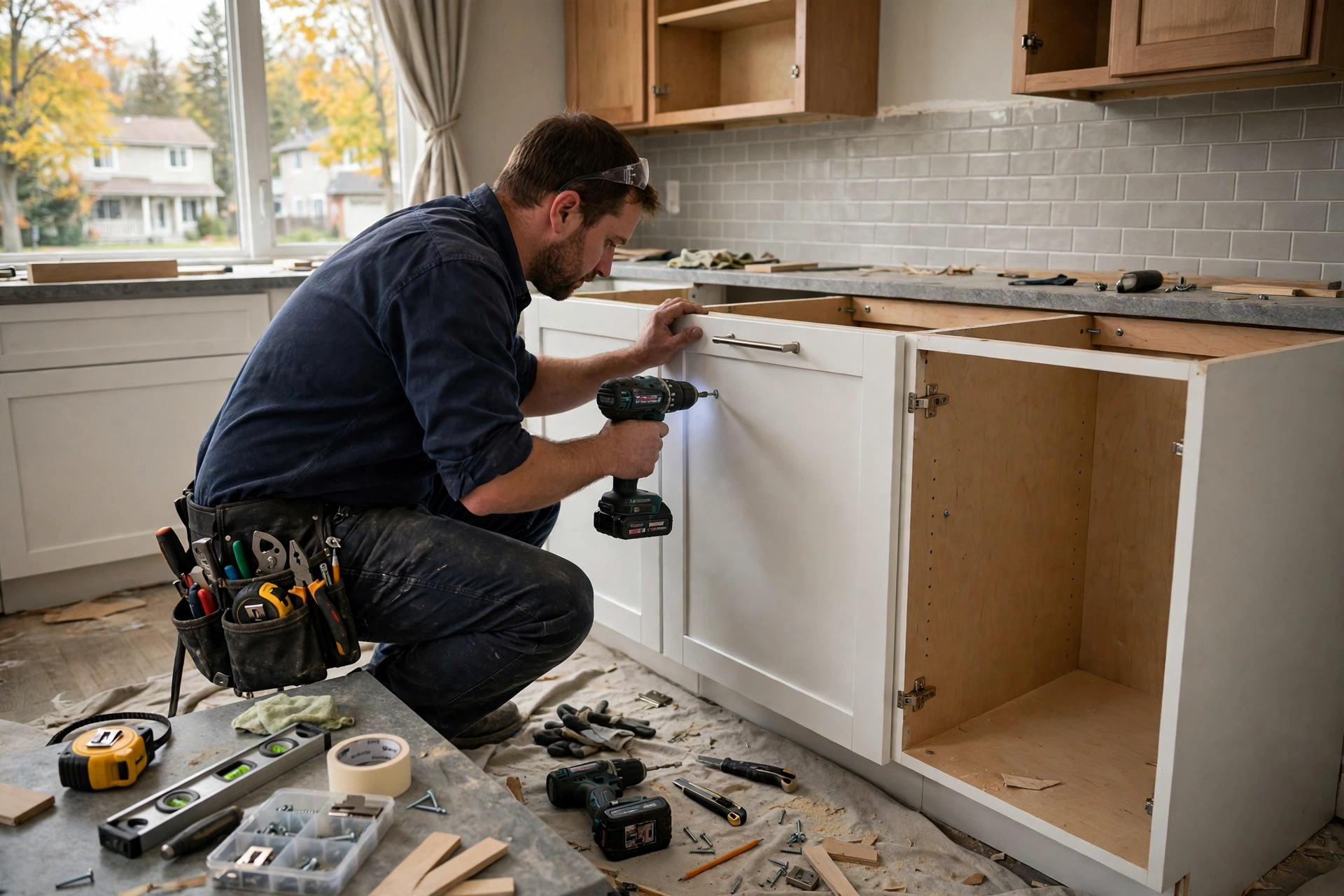
Stage two: storage inserts and interior work. This is where a builder kitchen starts working like a custom one: drawer banks fitted where a door cabinet wastes depth, pull-out shelves in base cabinets, a real corner solution, a built-out pantry, and dividers for trays, cutlery, and waste. Our custom storage solutions page shows the kinds of inserts and built-ins involved. This stage fixes function inside the existing layout. It cannot add a pantry where there is no cabinet to convert, enlarge the kitchen's footprint, or raise the uppers to the ceiling.
Stage three: full replacement with custom cabinets. New boxes built for the room — full-height uppers, drawers where drawers belong, cabinets sized to the actual walls with no filler gaps, and the island reworked if the plan allows. This stage fixes everything the first two cannot, and it is the one to choose when the layout itself is wrong or the boxes are tired. Our custom kitchen cabinets in Ajax page sets out what a full custom project involves.
The Upgrades New-Build Owners Ask for Most
Across newer Ajax homes, the same requests come up again and again, because they answer the same builder-grade shortcuts:
- Soft-close throughout. Doors and drawers that close quietly, every time. A small upgrade that changes how the kitchen feels every single day.
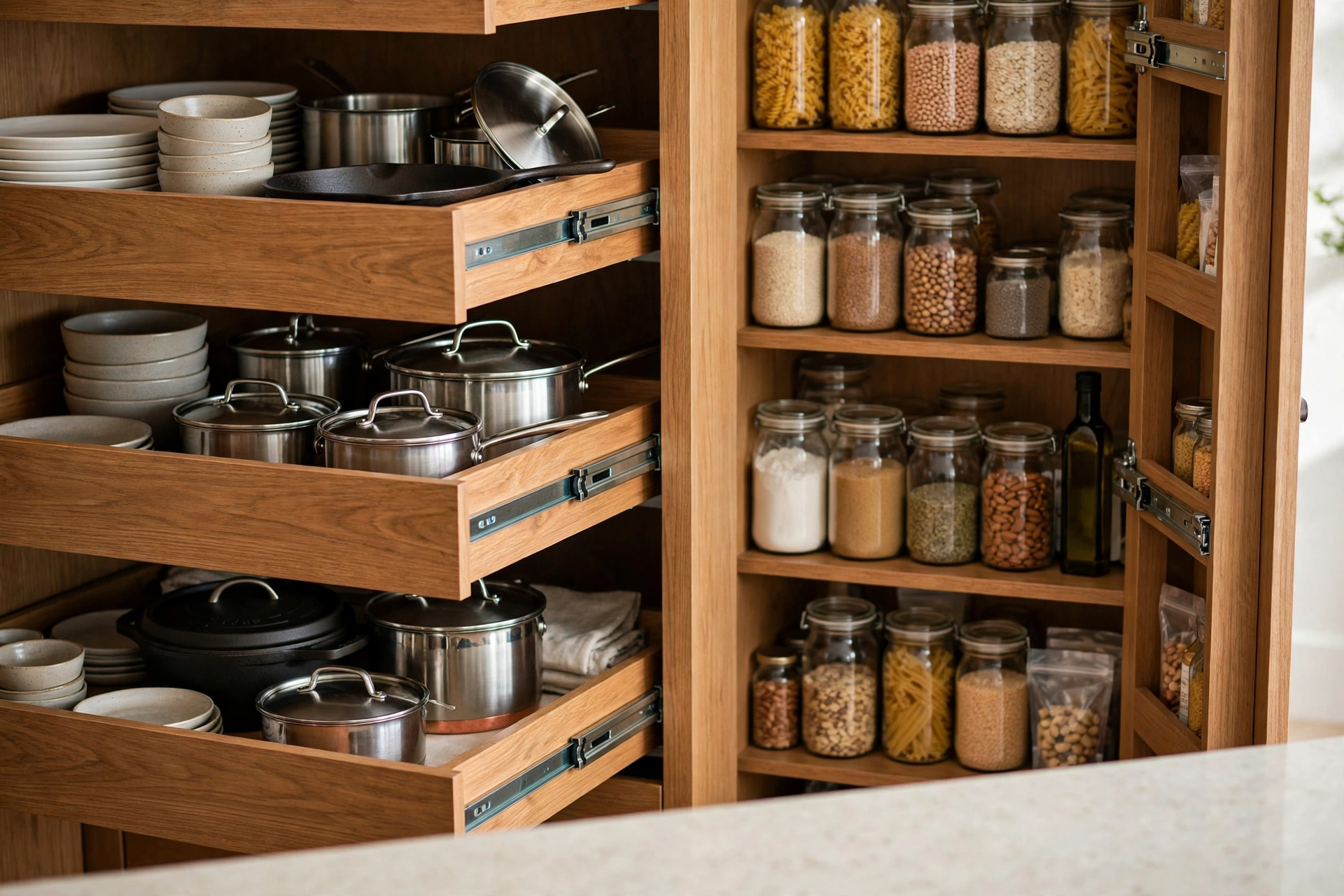
- Drawer storage in place of door cabinets. Deep drawers for pots and dishes you can see and reach from above, instead of crouching into a dark base cabinet. For most owners this is the single biggest daily improvement.
- Pantry build-outs. A tall cabinet fitted with pull-outs or proper shelving, or a run of shallow cabinets turned into a real pantry wall — in an Audley-sized kitchen there is almost always a place for it, which is a luxury smaller Ajax kitchens do not have.
- Full-height uppers. Cabinets carried to the ceiling, closing the dust gap and gaining a tier for the roasting pan, the serving platters, and everything else that comes out twice a year.
- Island additions and upgrades, where the plan allows. A larger island with drawer storage and seating, or drawer and pull-out fittings inside an existing island — possible in these open plans in a way it simply is not in a galley kitchen.
- The finishing runs: a proper cutlery and utensil layout, tray dividers beside the range, and a pull-out for waste and recycling instead of a bin under the sink.
Notice what is not on that list: making the kitchen bigger. That is the Audley difference. In Ajax's townhome and older small kitchens, upgrades are a fight for inches. In Audley, the inches are already there — the work is making the cabinets worthy of the room.
Timing: Warranty Cautions and the First Repaint Cycle
When to do this is a real question in a new home, and there are two practical cautions.
First, the warranty period. New Ontario homes carry Tarion warranty coverage, and while changing your cabinets is your own business, work that disturbs builder-installed plumbing, electrical, or structure can complicate a warranty claim in that area if something later goes wrong. The cautious pattern is to keep early upgrades to work that does not move services — doors, hardware, inserts — and to raise anything bigger with clear eyes, or hold it until the earliest warranty milestones have passed and any builder deficiencies have been reported and dealt with. If a deficiency is on your list — a cabinet door that never hung straight, a drawer that never ran true — get it reported as a builder item first, rather than quietly paying to replace it yourself.
Second, the repaint cycle. Many owners time a cabinet upgrade to the first repaint of the main floor, often a few years in, when the builder's flat paint has marked up and the house is ready for its own colours. Cabinets and paint are the two big visual surfaces in an open-plan room; doing them in the same season means door colour, wall colour, and hardware are chosen together, once. It is also when the builder kitchen has been lived in long enough that you know exactly what you would change — which drawers you curse, which corner eats the stockpot — rather than guessing from a model home.
There is no deadline pressure here. A builder-grade kitchen is fully usable while you plan, and living in it for a year or two first is not delay — it is research.
Planning Your Audley Upgrade
Start by writing down what actually bothers you, in order — looks, storage, layout, or the boxes themselves — and match it to the stage that fixes it. Check the existing boxes, especially under the sink. And decide your timing around the warranty and repaint points above.
Thinking about upgrading a builder-grade kitchen in Audley or elsewhere in Ajax? Call us at 289-460-0689 or reach out through our contact page to talk through which stage makes sense for your home — doors and hardware, storage inserts, or a full custom replacement — and what each stage can and cannot fix before you spend on it.
FAQ
Do I have to replace my whole builder kitchen to get a custom result?
No. Many Audley kitchens upgrade well in stages — doors and hardware first, then storage inserts such as drawer banks and pantry pull-outs, with full replacement only if the layout or the boxes themselves are the problem. The right stage depends on whether your complaint is looks, storage, or layout.
Will upgrading my cabinets affect my new-home warranty?
It can, if the work disturbs builder-installed plumbing, electrical, or structure in an area you later claim for. Keep early work to doors, hardware, and inserts that do not move services, report builder deficiencies as builder items first, and time larger work with the warranty picture in mind.
Why do my upper cabinets stop short of the ceiling?
Because builder kitchens use standard-height stock cabinets, even in homes with nine-foot ceilings. Full-height uppers are a custom item. Carrying cabinets to the ceiling closes the dust-collecting gap and adds a full tier of storage.