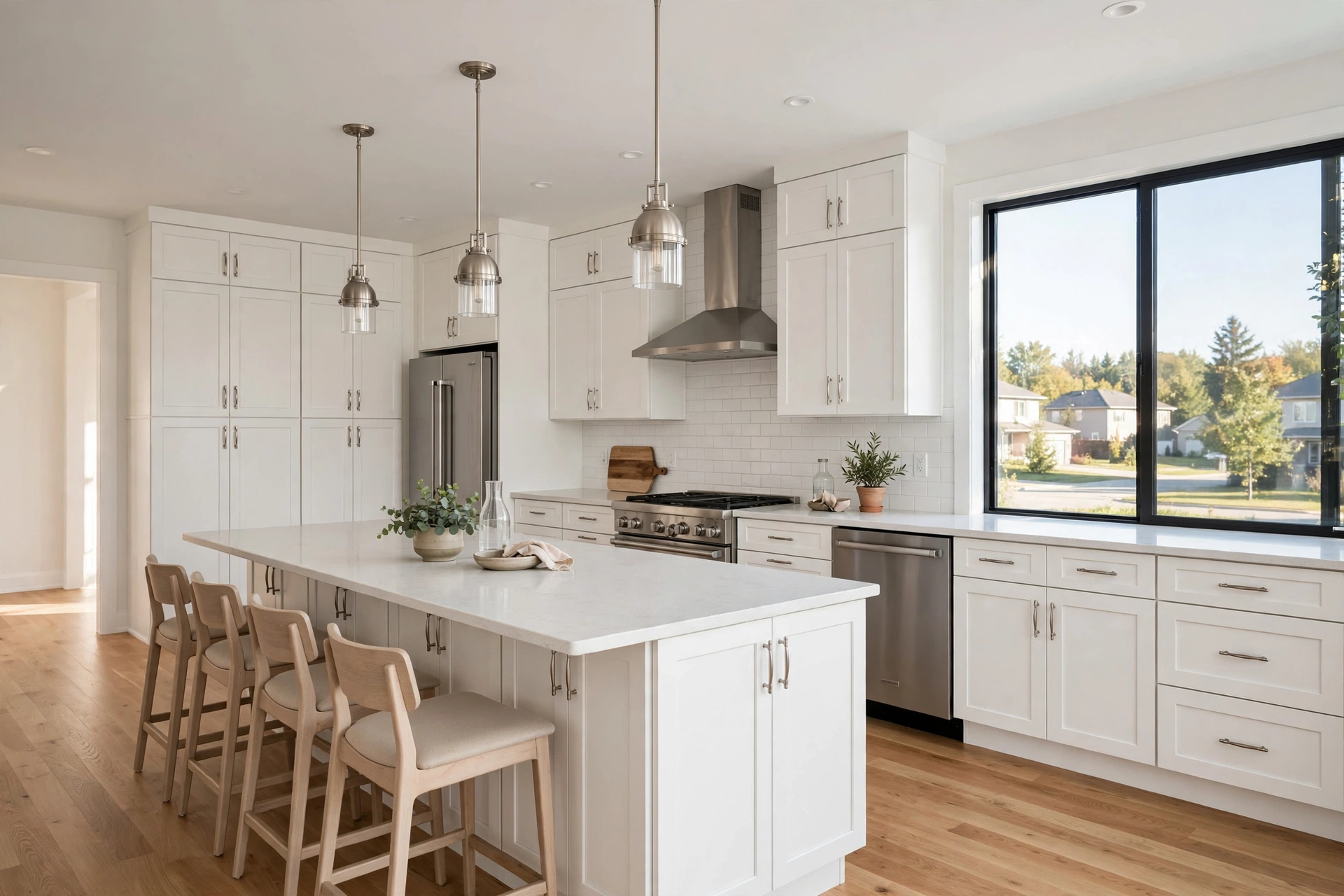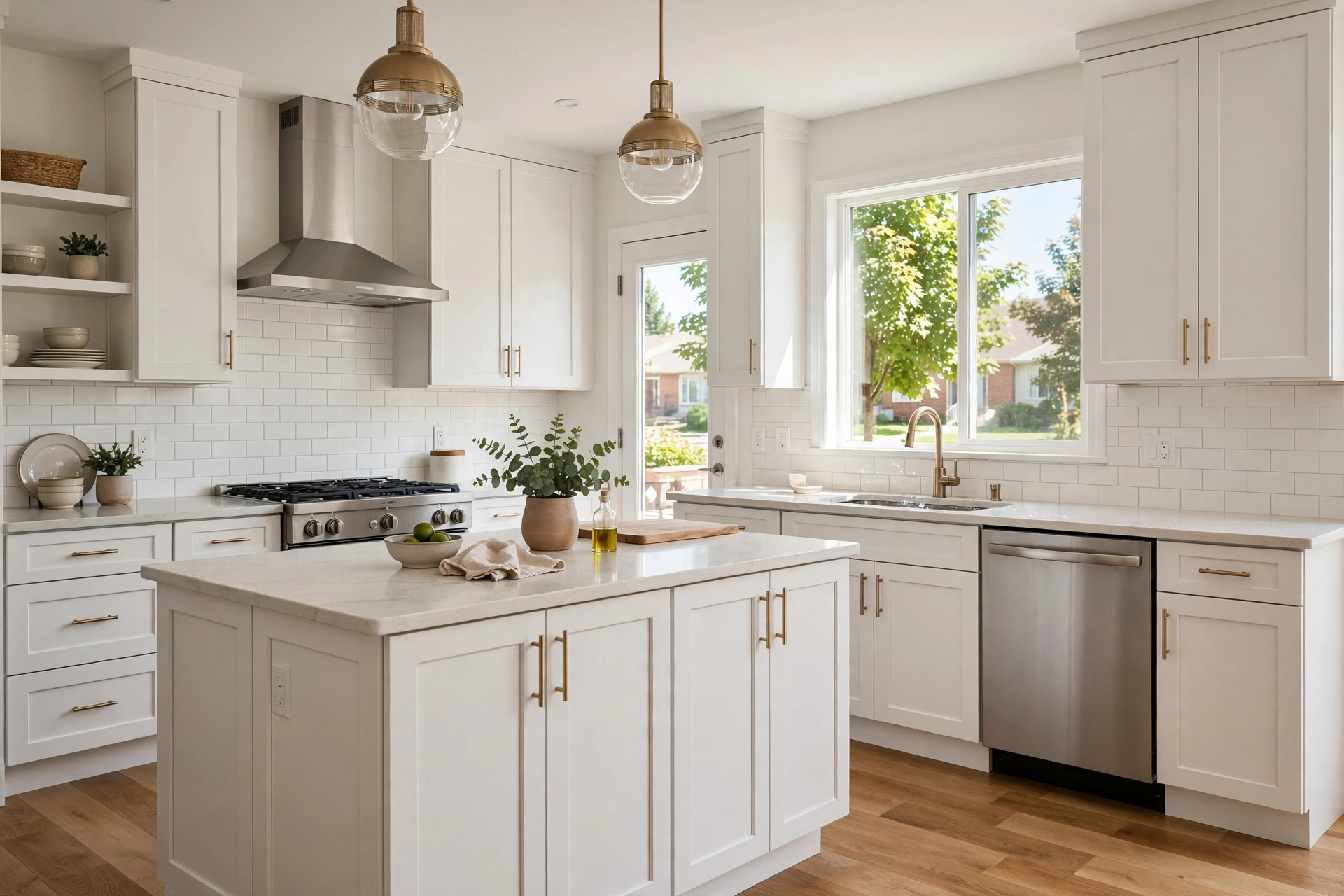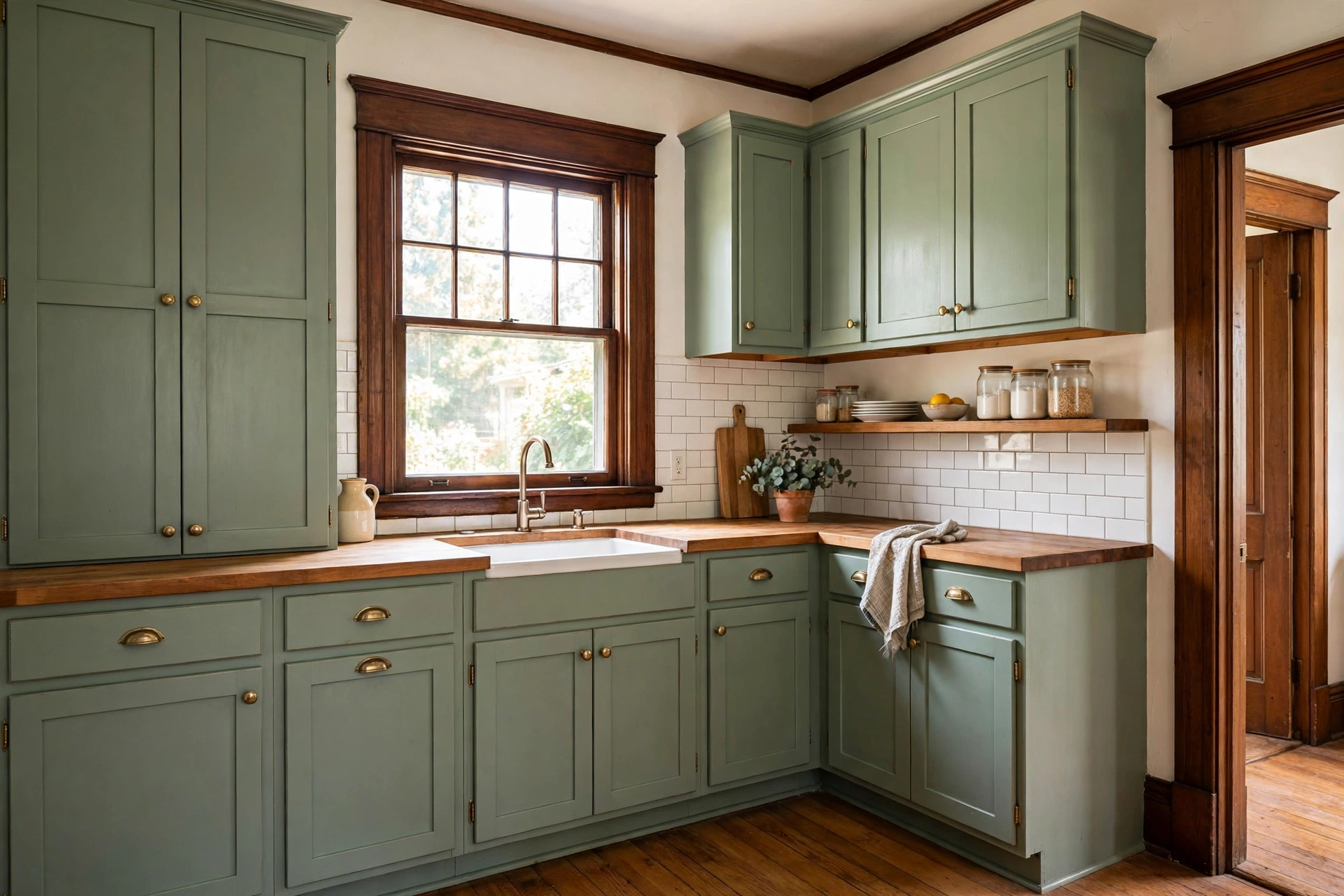
Pickering Village is Ajax’s older core, and its kitchens were not built for how people cook today. The same is true a few streets over in Central Ajax, where WWII-era and post-war bungalows still have their original small, closed-in kitchens. If you own one of these homes, an Ajax kitchen update is rarely just a style question. The room itself pushes back — walls that are not square, ceilings that dip, and services hidden behind the cabinets that predate modern codes.
That does not mean these kitchens cannot work beautifully. It means the cabinets have to be planned for the house you actually have, not for an ideal, perfectly level room. This guide walks through what these homes throw at a cabinet project, why custom work earns its place here, and what honestly cannot be known until the old cabinets come out.
What Older Pickering Village Kitchens Throw at You
Start with the walls. In an older home, a wall that looks straight rarely is. Plaster over lath, decades of settling, and framing never machined to modern tolerances mean corners are out of square, floors slope gently, and a run that measures perfectly at one end can leave a visible gap at the other. Ceiling heights add another quirk: a lowered bulkhead over one wall, a ceiling that changes height where an addition was joined on, or trim that cannot be moved without opening up a bigger job.
Footprints are the second constraint. Many of these kitchens were designed when the kitchen was a workroom, not the centre of the house. One short run of counter, a single window over the sink, and no real pantry were normal. There is often no spare wall to expand into without taking from a dining room or hallway, so every inch has to earn its place. A wasted corner or a six-inch filler gap is not a minor annoyance here — it is storage you will miss every day.
Then there is what sits behind the cabinets. Dated plumbing and electrical are common: older drain and supply lines run exactly where a deeper drawer bank wants to go, outlets land in the middle of a proposed tall cabinet, and circuits were never planned for a modern load of appliances. None of this is visible from the front. It only shows itself once the old boxes are removed, which is why older-home quotes need more caution than new-build quotes.
Finally, expect non-standard dimensions. Door openings may be narrower, windows may sit lower, and radiators or old flue chases can cut into a corner a standard plan assumes is empty. A plan copied from a newer Audley kitchen will not drop into this room. It has to be measured, wall by wall, in the house itself.
Why Custom Beats Stock Specifically in an Older Home
In a new, square room, stock cabinets can fit well enough. In an older Ajax home, the gaps between “standard” and “this room” are the whole job — and exactly what custom cabinets are built to close.
The clearest example is scribing. A scribed cabinet or filler is cut to follow the actual profile of an uneven wall or floor, so it sits tight with no wedge-shaped gap to hide. A stock cabinet, built square, cannot do that; against an out-of-square wall it either rocks, leaves a tapering gap, or forces the installer to shim and cover. That tight fit in an older home is usually scribing and careful measuring, not luck.
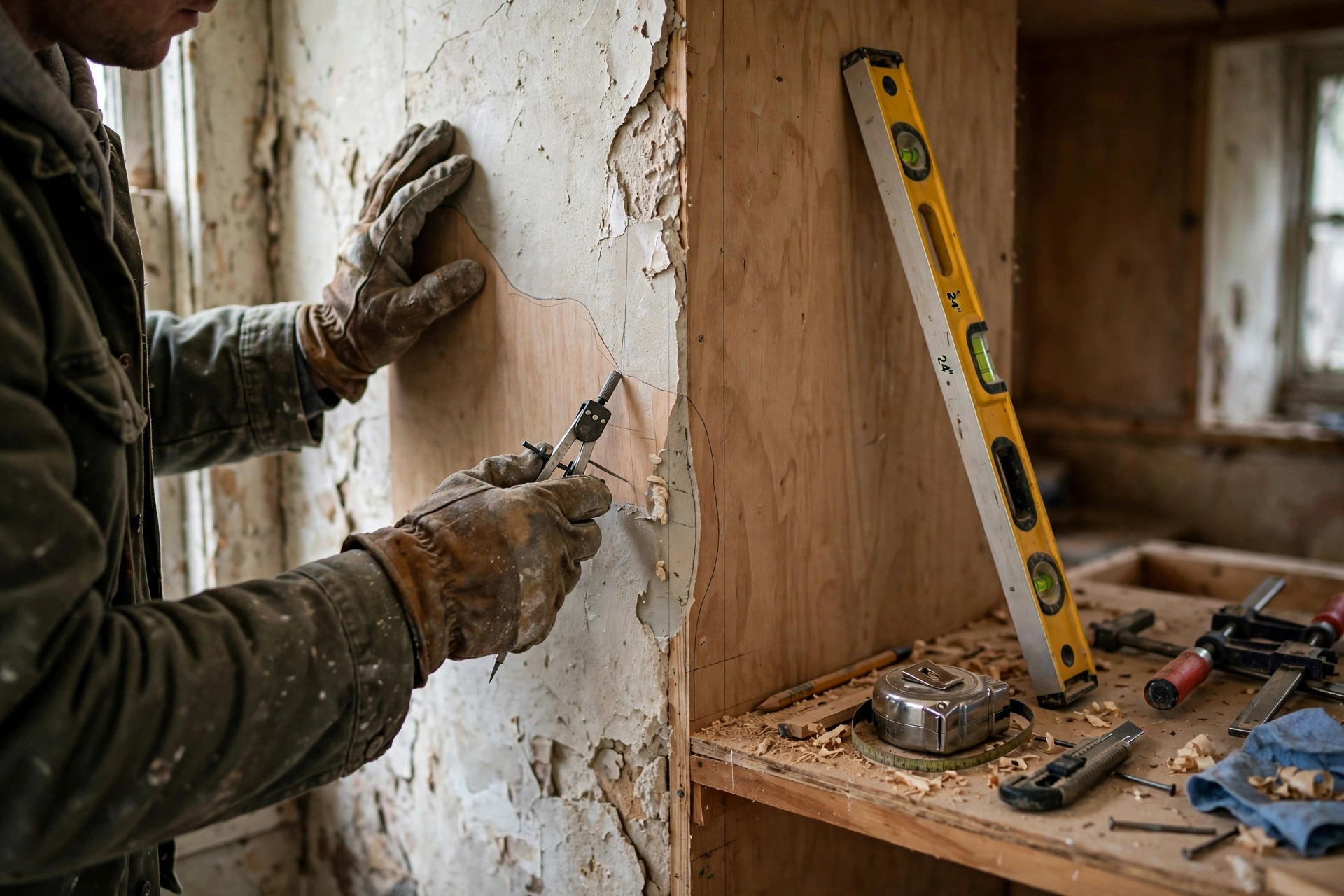
Custom sizing solves the footprint problem, too. Non-standard depths — a slightly shallower cabinet to preserve a tight walkway, a tall pantry built to the true ceiling height on that specific wall, drawers sized to fit between an old window casing and a door frame — let a small kitchen gain usable storage without changing its walls. In a compact Pickering Village kitchen, recovering even a few inches per run adds up to a full extra cabinet’s worth of storage over the length of the room. Our custom kitchen cabinets in Ajax page shows how that made-to-measure approach is planned, from measurement through to installation.
Matching the house matters as well. Pickering Village homes often have distinctive trim — deeper baseboards, cased openings, and detailed window profiles. Custom work can match or sit comfortably alongside those profiles, with crown and casing chosen to belong in the room. Stock cabinets offer a short list of standard trims that can look pasted on in a character home.
There is also a sequencing advantage. Because custom cabinets are built after the room is measured — and, on a careful job, re-checked after demolition — surprises found behind the old kitchen can still be designed around. A pipe that has to stay can be boxed neatly inside a cabinet with proper access, rather than forcing a last-minute cut into a stock box on site.
Keep the Character, Fix the Function
The goal in an older home is not to make the kitchen look like a new-build kitchen that happens to be in Pickering Village. It is to keep what makes the house feel like itself, while fixing the storage, counter space, and daily frustrations that made you want an update in the first place.
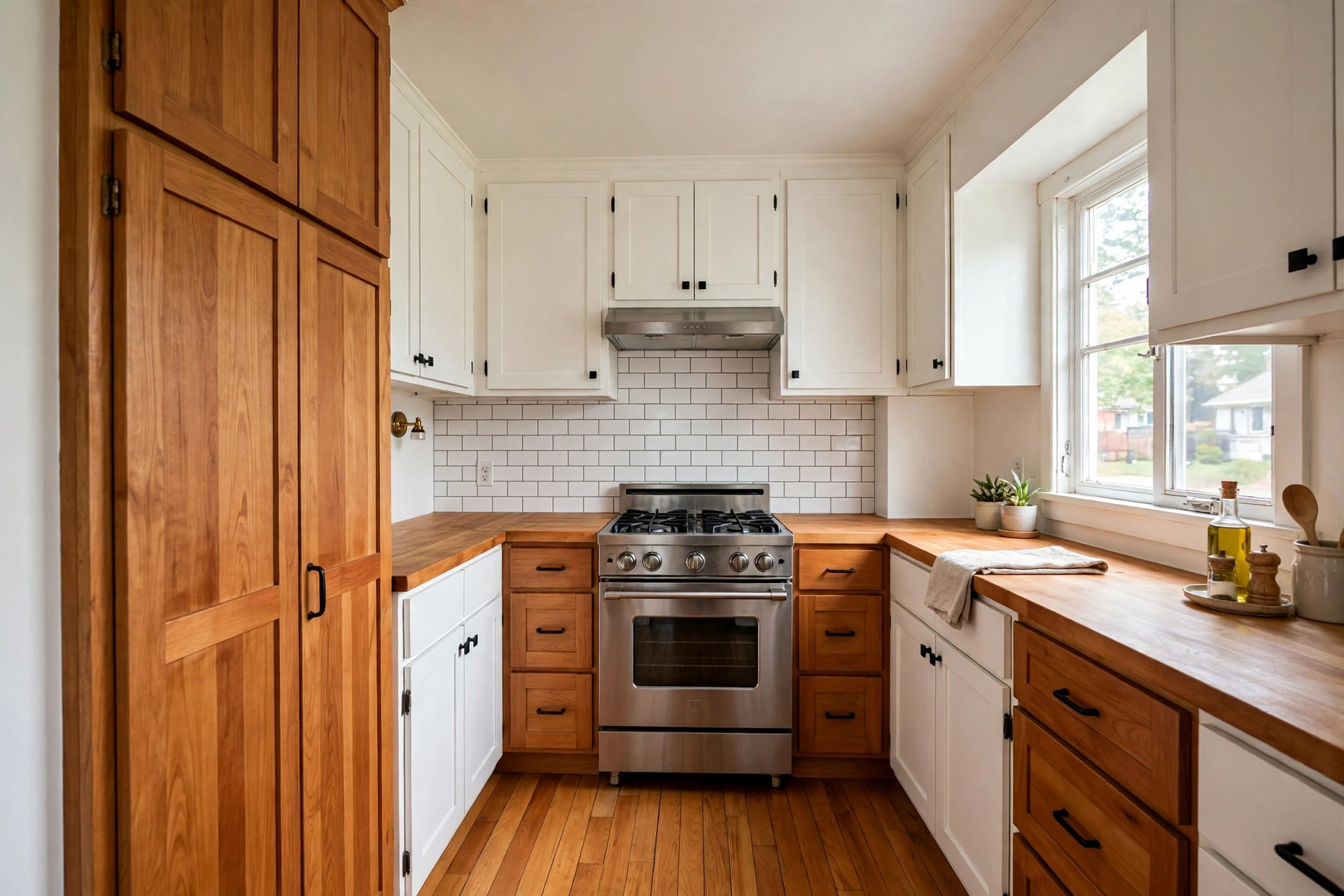
Door style is the easiest place to hold that line. Simple shaker and flat-panel-with-bead styles, inset-look framing, and modest, period-appropriate hardware sit naturally in older Ajax homes. Very flat, handle-less, high-gloss doors can look striking in a new Audley build and oddly out of place in a post-war bungalow — not because they are poor quality, but because nothing else in the house speaks that language. Painted cabinets, or a mix of painted uppers with a wood lower run, often bridges old and new best.
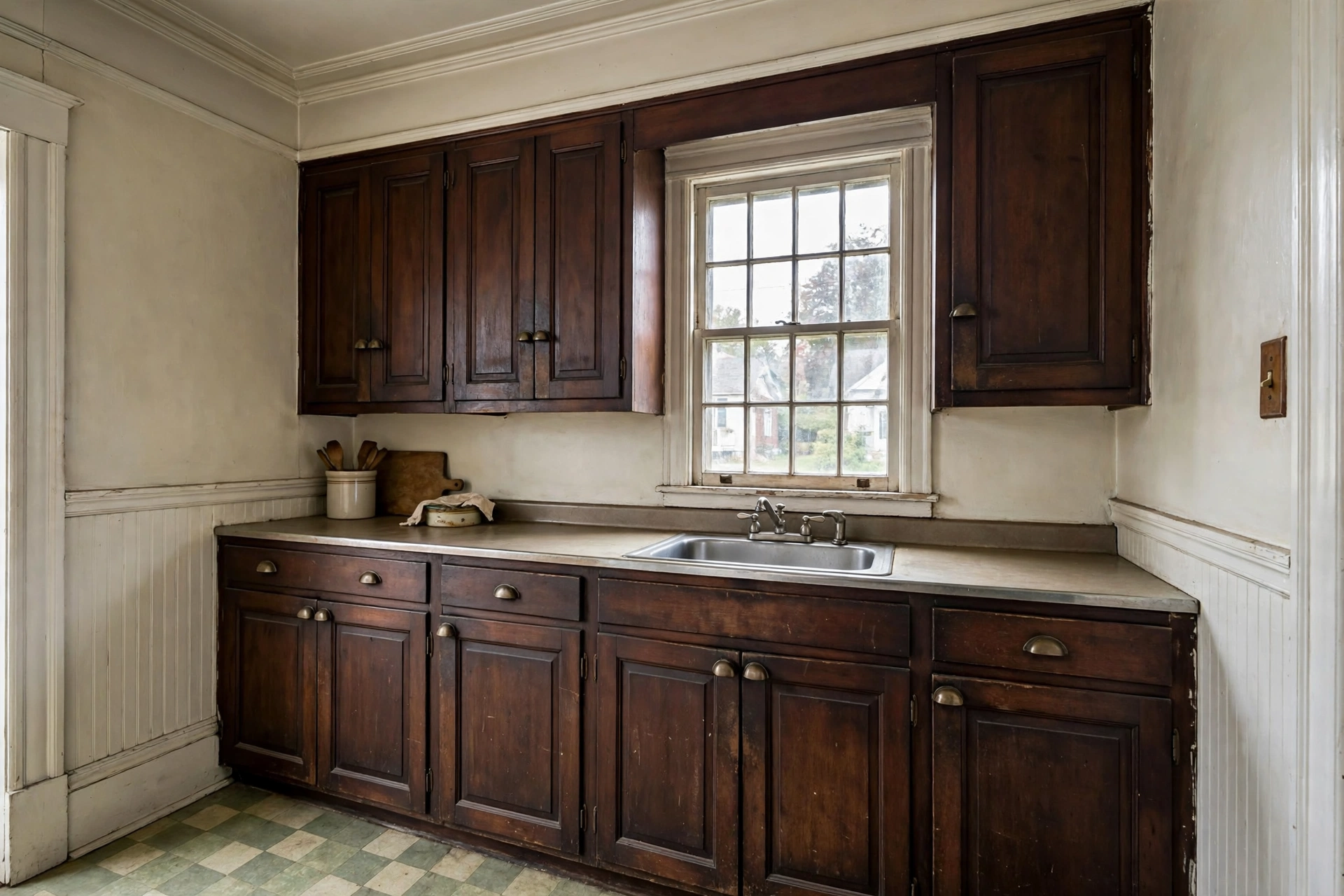
Before assuming everything has to go, check what you already own. Many older kitchens in Pickering Village and Central Ajax were built with solid wood or plywood boxes that are still square and dry, even when the doors and finish look tired. Where the boxes are sound and the layout works, cabinet refinishing and painting in Ajax can change the colour and feel of the kitchen while keeping that well-built structure — and keeping more of the home’s original fabric in place. Refinishing is not the right answer when the layout itself is the problem, or when boxes are swollen or damaged under the sink, but in an older home it deserves a serious look before demolition, not an automatic skip.
Function is where the real gains are, and most are invisible in a photo. Drawer banks instead of hard-to-reach door cabinets beside the range, a narrow pull-out for trays in a gap too small for a standard cabinet, and full-height storage fitted into an awkward alcove make a small older kitchen feel twice as workable without adding a square foot. Keep the window and the trim that give the room its character, and spend the effort on how the cabinets work.
The Honest Unknowns — What Can’t Be Quoted Until the Old Cabinets Come Out
Any honest conversation about an older-home kitchen in Ajax has to include this section — pretending otherwise is how budgets break.
No one can see behind your existing cabinets until they are removed. The condition of the wall, the exact route of plumbing and electrical, hidden water damage, and whether the floor runs level — all of that is an informed guess before demolition and a fact only after. A quote that prices an older Pickering Village kitchen as if none of that could exist is not precise. It is optimistic.
A few unknowns come up again and again in this housing stock. Rot or mould behind a sink cabinet that has leaked slowly for years. Wiring that needs to be moved or updated by a licensed electrician before new cabinets can go in — work outside the cabinet scope, with its own scheduling. Plumbing that has to shift a few inches to centre a sink or clear a drawer bank. Walls or floors uneven enough to need extra preparation before cabinets can be scribed and levelled. None of these are reasons not to do the project. They are reasons to stage it: measure carefully, open the room, confirm what is there, then finalize the details that depend on it.
Comparing quotes on an older home is different, too. Look for a quote that names its assumptions — what it includes, what it allows for, and what would be priced separately if found behind the cabinets. A slightly higher quote with clear allowances is often the more honest number; the lowest quote is frequently just the one that assumed away the most unknowns.
The sensible order is: get the room measured, talk through layout and door style, have the boxes and visible plumbing and electrical inspected as far as possible without demolition, and hold a contingency for what demolition may reveal. Older homes reward homeowners who plan for surprises, and punish anyone who budgets to the last dollar assuming there will be none.
Pickering Village and Central Ajax bungalows have lasted this long because they were built with care. A cabinet update that respects the room — scribed to its walls, sized to its footprint, honest about its unknowns — will serve the house far better than a standard kitchen forced into a non-standard space.
Thinking about updating a kitchen in Pickering Village or an older Central Ajax home? Call us at 289-460-0689 or reach out through our contact page to talk through your room, your existing cabinets, and what can — and cannot — be known before work starts. Ajax, ON, L1S 0A7.