If your Ajax kitchen looks tired, you are usually not choosing between two versions of the same job. Refinishing and replacing solve different problems, cost very different amounts, and make sense in different houses — and in Ajax, the right answer often depends less on what your cabinets look like today and more on when your home was built and what the boxes are actually made of.
A dated colour on solid boxes is a surface problem. Boxes that are swelling, sagging, or crumbling are a construction problem — and that cannot be painted over. This guide walks through the test that separates the two, and why the answer flips between older homes in Pickering Village and Central Ajax and newer builder homes in Audley.
The 30-Second Test — Box Condition, Layout, and Door Style
Before you compare prices, answer three questions honestly. They will point you to the right option faster than any quote.
1. Are the boxes sound? Open a few doors and look inside, not just at the fronts. Check for swelling or soft spots under the sink and around the dishwasher, and whether shelves sag and doors sit square. Solid, dry, square boxes are worth keeping. Boxes with water damage, cracked frames, or crumbling particleboard are not a good base for new paint or doors — you would be dressing up a structure that is already failing.
2. Does the layout work? If you like where the sink, stove, and fridge sit and the kitchen flows the way you cook, refinishing keeps all of that and changes the look. If the layout is the daily frustration — too little counter space, an unreachable corner cabinet, no drawers near the range — refinishing gives you a prettier version of the same frustration. Layout problems require replacement, because only new boxes can be built to a new plan.
3. Do you like the door style, or just dislike the colour? Refinishing keeps your existing doors and changes their colour and finish. If the door profile itself is what dates the kitchen — a style you would not choose again — refinishing alone will not change it. That is where refacing, with new doors on the existing boxes, or a full replacement comes in.
In short: refinish if the boxes are sound and the layout works. Replace if either one fails. Refacing sits in the middle, for sound boxes and a workable layout where you also want a new door style.
What Refinishing, Refacing, and Replacing Each Actually Involve
These three terms get used interchangeably in conversation, but they are three different jobs.
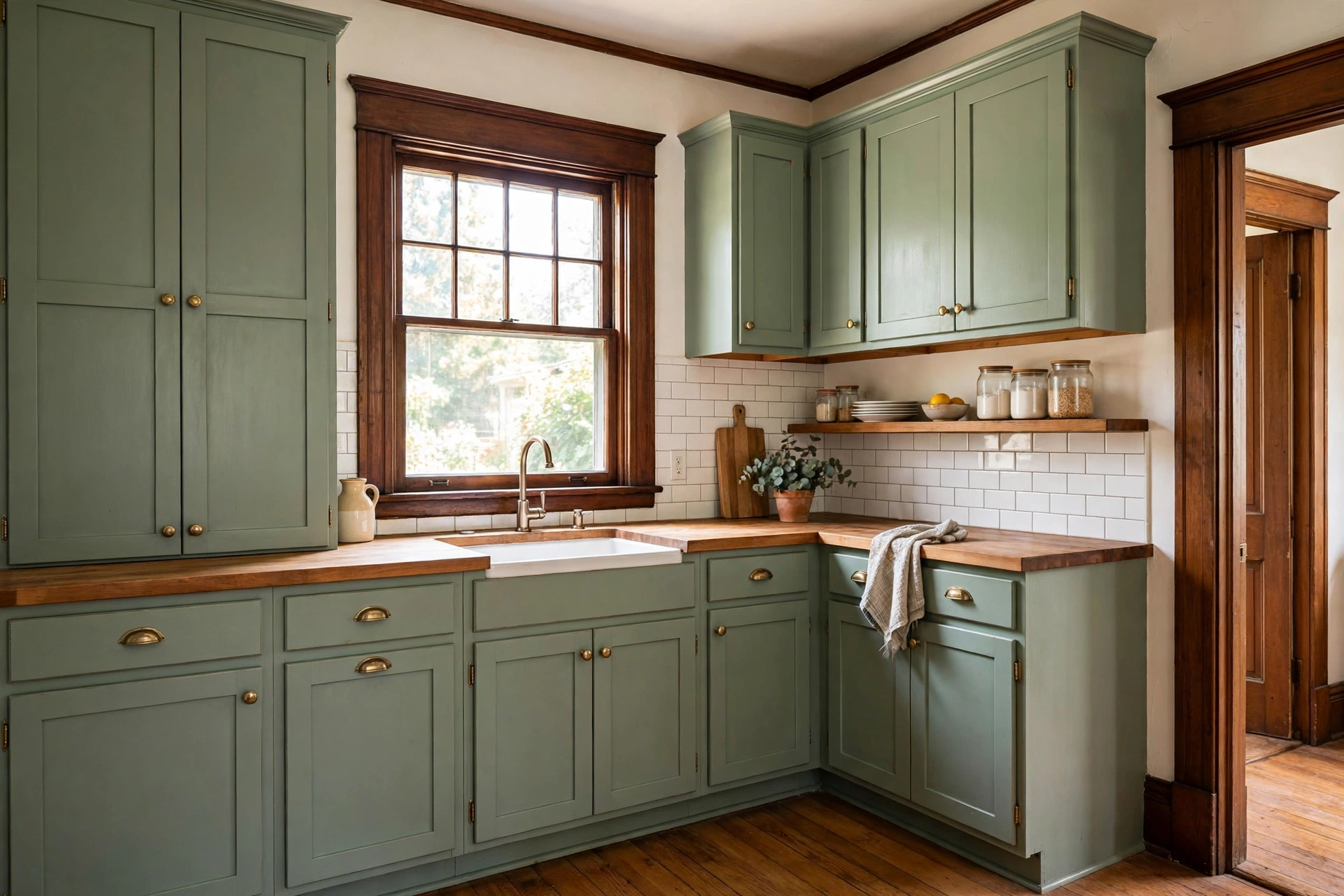
Refinishing (including painting) keeps your existing boxes, doors, and drawer fronts. Doors and fronts are removed, cleaned, sanded, repaired where needed, primed, and finished — typically painted in a new colour — and the visible box frames are finished to match. Hardware can be swapped at the same time, which changes the feel more than most people expect. The structure, layout, and door style stay exactly as they are. It is the least disruptive and lowest-cost route, and it only makes sense on boxes and doors that are in good enough condition to be worth finishing. Our cabinet refinishing and painting service in Ajax page walks through what that preparation and finishing process involves.

Refacing also keeps the boxes, but goes further: new doors and drawer fronts replace the old ones, and the exposed box surfaces are covered with a matching veneer or finish. You get a genuinely new door style without new boxes. The layout does not change, and the inside of the cabinets stays as it was, so refacing only pays off when the boxes themselves are solid and well built.
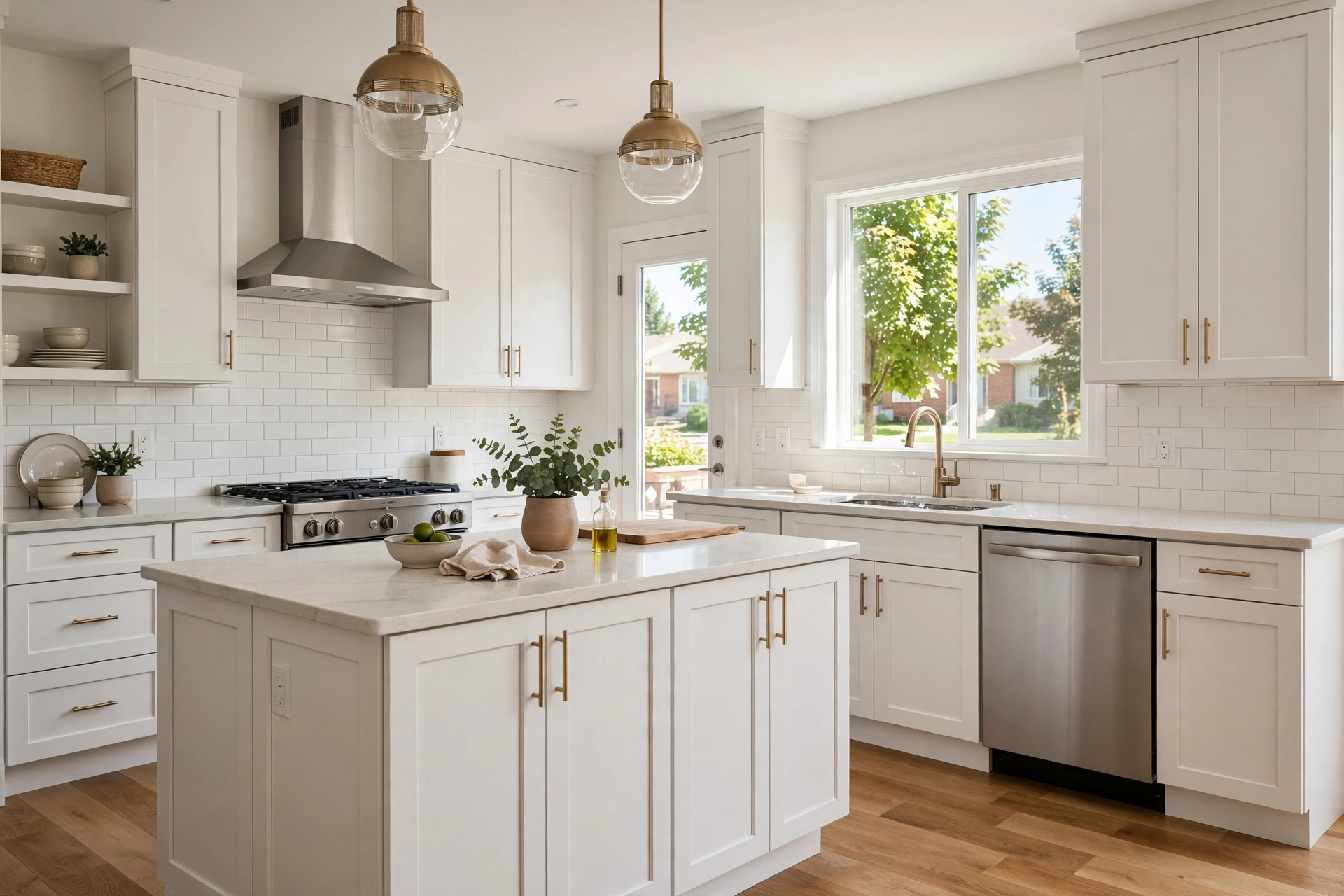
Replacing removes everything and starts from the room itself. New boxes are built or selected to the exact measurements of your kitchen, in the layout, door style, materials, and storage configuration you choose. It is the only option that fixes layout, storage, and failing boxes at once, and it is the option behind a full custom kitchen cabinets project in Ajax — floor-to-ceiling storage, drawer banks where door cabinets used to be, and cabinets scribed to fit walls that are not perfectly square.
Cost orientation — read this as orientation, not a quote. For refacing, Home Depot’s Ajax page puts refacing a standard kitchen at roughly $1,000–$9,000 depending on scope — doors and fronts only at the low end, more extensive refacing at the high end. Use that range only to orient yourself: your actual cost depends on kitchen size, number of doors and drawers, door material, and finish. Refinishing the doors you already own generally sits below refacing, because no new doors are being made. Full replacement sits well above both, because you are paying for new boxes, doors, hardware, and installation, not just a finish. Any firm number needs measurements and a look at your existing boxes, which is why a quote based on photos of the fronts alone should be treated with caution — the inside of the sink cabinet matters more than the colour of the doors.
The Ajax Wrinkle: The Answer Flips by Housing Era
This is where a generic national guide will mislead you, because Ajax has two very different kinds of kitchen, and they point in opposite directions.
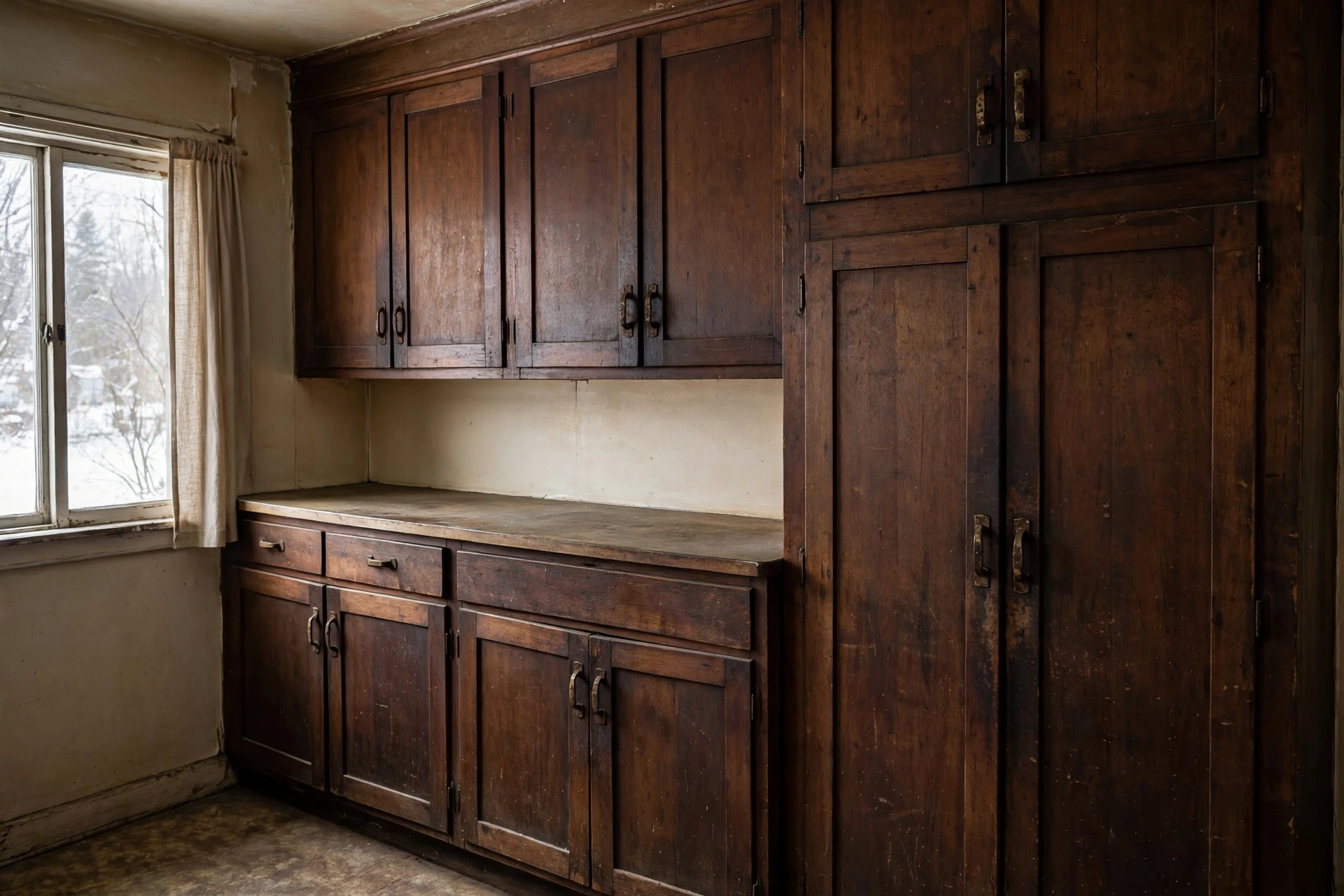
Older homes in Pickering Village and Central Ajax — including the post-war bungalows through Central Ajax — often hide the best refinishing candidates in town behind the worst-looking doors. Many of these kitchens were built with solid wood or plywood boxes that were made to last. The doors may be dark, worn, or in a style that dates the whole room, the finish may be chipped, and the hardware may be decades old — and the boxes underneath can still be square, dry, and stronger than much of what is installed today. In these homes, replacing everything often means tearing out the best-built part of the kitchen to fix a surface problem. Refinishing, or refacing with new doors on those solid boxes, frequently makes the most sense — provided the layout works and there is no hidden water damage under the sink or around older plumbing. The cautions in older homes are real, though: smaller footprints, out-of-square walls, and older plumbing and electrical behind the cabinets can turn up surprises once work starts, so the box check needs to be thorough, not a glance.
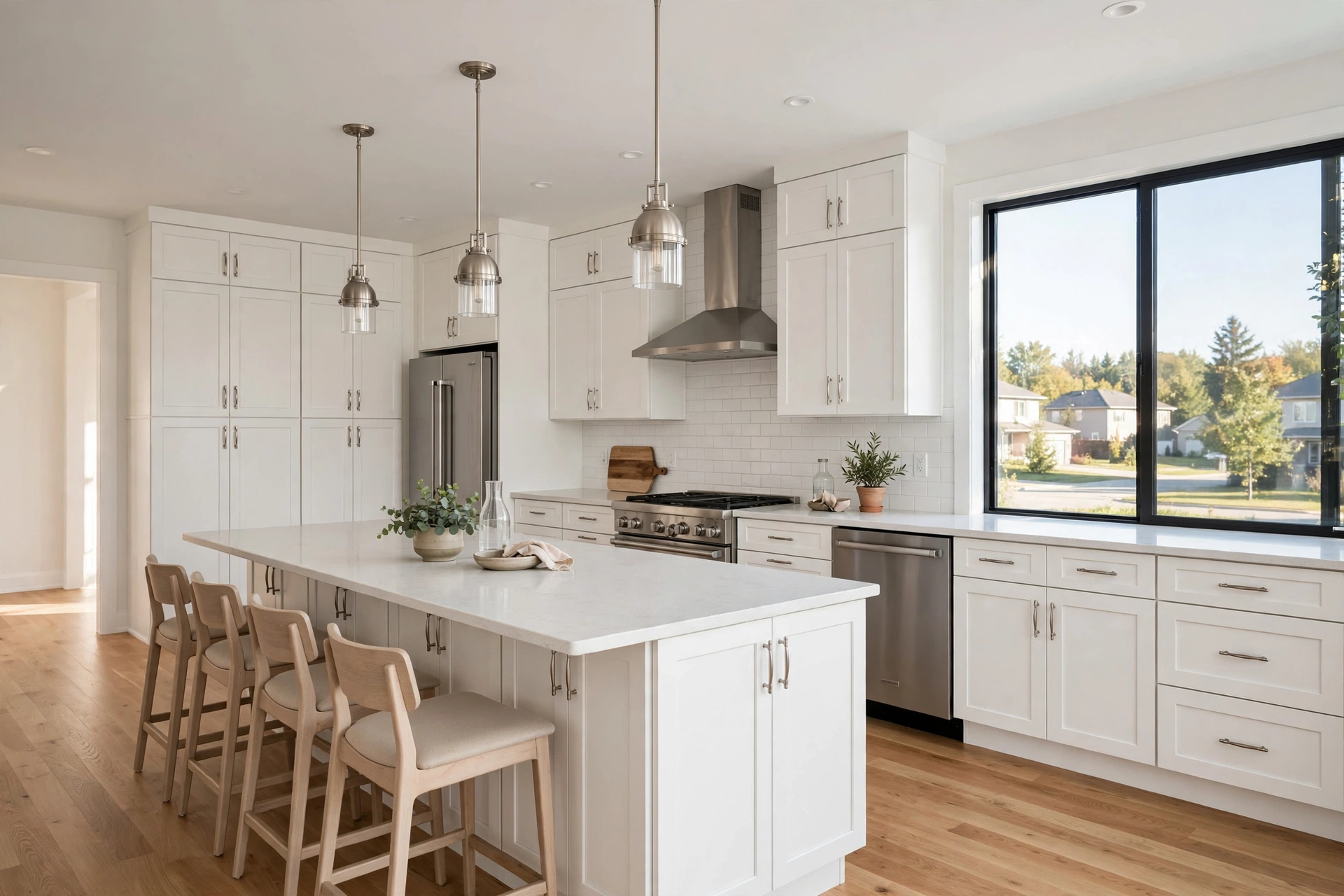
Newer homes in Audley present the mirror image. Post-2000 detached homes and townhomes in Audley often have kitchens that look fine in photos, but the boxes behind those doors are frequently builder-grade particleboard or thin melamine, chosen to hit a build price. Particleboard does not refinish like solid wood: it holds screws poorly once stressed, swells permanently with moisture near the sink and dishwasher, and chips at the edges in ways that are hard to repair invisibly. A newer-looking kitchen can therefore be a worse refinishing candidate than an older solid-wood kitchen in Pickering Village. If the Audley boxes are still tight and dry and only the finish bothers you, refinishing or refacing is still sensible. If they are already swelling, peeling, or sagging, replacement is the honest recommendation — even though the kitchen is the newer one.
That flip is the single most useful thing to understand before you get quotes in Ajax: do not judge the job by the age of the kitchen or how it photographs. Judge it by what the boxes are made of and what condition they are in.
Timeline and Disruption, Compared Honestly
Refinishing is the lightest disruption. Doors and fronts come off to be finished, and there is no demolition, no plumbing moves, and no waiting on new boxes to be built. You will still lose easy use of the kitchen while frames are finished and paint cures, and you should plan for dust control during sanding and spraying.
Refacing takes a little longer, because new doors have to be made to size first, but on-site work is still measured in days rather than weeks, and boxes, counters, and appliances generally stay in place.
Replacing is a renovation, not a refresh. The old kitchen comes out, any plumbing, electrical, or wall repairs happen while the room is open, and new cabinets are installed. Timelines stretch with layout changes, custom sizing for out-of-square older rooms, and townhome or condo logistics like elevator bookings and restricted work hours. It is the only option that changes how the kitchen actually works — and the longest, messiest project by far.
One warning applies to all three: timelines assume the boxes pass inspection. If the sink cabinet reveals rot that was not visible at quoting, the job can change mid-stream. A contractor who insists on seeing inside the cabinets before quoting is not being difficult — that check keeps the timeline honest.
How to Decide for Your Kitchen
Work through it in this order:
- Inspect the boxes, especially under the sink and beside the dishwasher. Sound and dry points to refinishing or refacing; swelling, sagging, or crumbling points to replacing.
- Decide whether the layout earns its keep. If it does not, stop pricing finishes — you need new cabinets, and refinishing money would be wasted.
- Decide whether it is the colour or the door style you dislike. Colour only: refinish. Style as well, on sound boxes: reface. Both, on failing boxes: replace.
- Match the answer to your housing era, not the other way around. Solid older boxes in Pickering Village or Central Ajax deserve a serious refinishing conversation. Newer Audley builder boxes deserve a sceptical one — look inside before you assume they are worth keeping.
If you are still torn, photos of the kitchen — including inside two or three cabinets — plus rough measurements are enough for a grounded recommendation before you commit.
Ready to talk through which one makes sense for your kitchen? Call us at 289-460-0689 or reach out through our contact page for an assessment based on your boxes and layout — not just the colour of your doors. Ajax, ON, L1S 0A7.