The most expensive cabinet in your kitchen is the one you didn’t need.
I’m not a cabinet maker. I’m not an interior designer. I’m a residential handyman and home-improvement professional who has spent years working around kitchens, evaluating cabinet condition, checking installation quality, dealing with trim, doors, hardware, painting, and the hundred small problems that surface when a room isn’t as square as the drawing suggests. I see what happens after the cabinets go in. I see the filler gaps that were never addressed, the doors that don’t swing clear of the wall, the blind corners nobody can reach, and the countertops that don’t sit flush because the base below was two inches off.
That perspective matters here, because most of the content you’ll find on this topic is written by people who sell cabinets. And the most common thing they’ll tell you is that the answer is “custom”, or at least “semi-custom”, and that the price gap is the only thing standing between you and the kitchen you want.
I’m here to tell you that the real cost difference between stock and custom cabinets is not what the per-linear-foot numbers suggest. The real question is whether your room actually needs custom construction, or whether a well-planned stock layout with a few targeted adjustments would solve the same problem for a fraction of the price.
The Story That Changed How I Think About This Decision
An Ajax homeowner came to me with an older kitchen that had an awkward corner, uneven walls, and limited clearance near a doorway. Their first assumption was that they needed fully custom cabinets because the layout was not perfectly square. They’d already started talking to a local cabinet shop and were getting ready to write a check.
After measuring the space, I found that the irregularity was concentrated in one corner rather than throughout the entire kitchen. The rest of the run was close enough to standard dimensions that stock cabinets would work without serious compromises.
Instead of building every cabinet as custom, we discussed using standard-sized cabinets with a planned filler in the problem area, a modified blind-corner arrangement to make that space actually usable, and a custom countertop to absorb the small discrepancies. The Ajax homeowner kept usable door and drawer clearances, maintained the storage they needed, and avoided the much higher cost of making the entire kitchen custom.
They chose the stock-based layout with those adjustments. It was not simply a matter of buying standard cabinets and hoping they’d fit. The measurements, fillers, corner access, appliance clearances, and installation sequence had to be planned carefully. In that case, fully custom cabinetry would have solved the problem, but it would have been unnecessary because a targeted adjustment addressed the actual issue.
That experience reinforced my general approach: inspect and measure the space first, identify exactly where the difficulty lies, and then use custom work only where it provides a real benefit.
The Sticker Price Is Not the Real Price
The biggest misconception I see homeowners, and even other contractors, walk into this conversation with is that the cabinet box price tells you the real cost of the project.
Homeowners often compare the price of stock cabinets with the price of custom cabinet doors and boxes, and that’s where they stop. But the final budget includes:
- Fillers, panels, trim, and toe kicks
- Hardware, drawer systems, and hinges
- Delivery and demolition
- Installation labor
- Countertop adjustments or reordering
- Plumbing or electrical changes
- Scribing, leveling, and on-site modifications
- Finishing details
Stock cabinets can be less expensive, but the savings shrink when the kitchen has uneven walls, unusual dimensions, tight corners, or appliances that do not align with standard cabinet sizes. A low-priced stock layout may require extra fillers, modified panels, scribe work, corner compromises, or more installation labor. In some cases, the homeowner saves on the cabinets but pays more to make them work in the room.
Custom cabinets also are not automatically twice the price of stock. The cost depends on the wood or panel material, construction method, finish, hardware, drawer systems, accessories, and the amount of design and installation work involved. A straightforward custom project may have a smaller price gap than expected, while a high-end custom kitchen with premium finishes and specialized storage can exceed the stock option by far more than two times.
Here’s a practical example I’ve used with homeowners before. A stock cabinet package comes in at $14,000. But the kitchen has uneven walls and a few awkward transitions, so the installation requires an additional $7,000 in fillers, scribe work, modified panels, and extended labor. The total installed cost is $21,000.
The comparable custom layout, designed around the actual dimensions of the room, comes in at $23,000 installed. The actual difference is $2,000, not the $9,000 gap the sticker prices suggested.
I tell homeowners to compare the complete installed project, not just the cabinet line-item price.
My Decision Framework: Start With the Room, Not the Label
I don’t use a fixed dollar threshold, because kitchen size, materials, hardware, and local labor rates can change the comparison too much for a single number to be reliable. Instead, I use a set of practical indicators that tell me when stock is working and when it’s fighting the room.
When Stock or Semi-Custom Is the Right Call
I generally advise homeowners to consider stock or semi-custom cabinets when:
- The walls and floor are reasonably straight and level
- The layout is fairly conventional
- Standard widths can be used with only modest fillers
- The total filler and dead-space allowance is roughly 3 to 5 percent of the cabinet run
- The homeowner is comfortable choosing from standard door styles, finishes, and storage options
- The complete installed stock or semi-custom price is at least 15 to 20 percent lower than a comparable custom quote
When to Get a Serious Custom Quote
I recommend getting a serious custom quote when:
- More than one cabinet requires unusual width, depth, or height
- Fillers and dead corners begin consuming approximately 8 to 10 percent or more of the available cabinet run
- The kitchen has several difficult conditions, such as uneven walls, sloped ceilings, shallow areas, tight corners, or unusual appliance locations
- The homeowner needs specific storage that standard accessories cannot provide
- The custom option improves the layout enough to recover meaningful storage or usable workspace
- The installed-price difference is relatively small, around 10 to 15 percent, after comparing equivalent hardware, finishes, panels, trim, delivery, and installation
These percentages are not engineering limits. They are warning signs that the stock layout may be creating unnecessary compromises. A small filler beside a wall is normal. Multiple fillers, oversized panels, inaccessible blind corners, and reduced drawer space suggest that the cabinet system is being forced to fit the room.
What to Include in an Apples-to-Apples Comparison
When I ask a homeowner to get a real comparison, I tell them to make sure both quotes include:
- Cabinet boxes, doors, drawers, and hardware
- Fillers, finished ends, panels, toe kicks, trim, and crown moulding
- Delivery and installation
- Scribing, leveling, and on-site modifications
- Countertop, appliance, plumbing, and electrical adjustments
- Removal and disposal of the existing kitchen
If a quote doesn’t cover all of that, you’re not comparing the same thing. You’re comparing the cabinet to the whole project.
The Opinion That Might Make a Cabinet Shop Slightly Uncomfortable
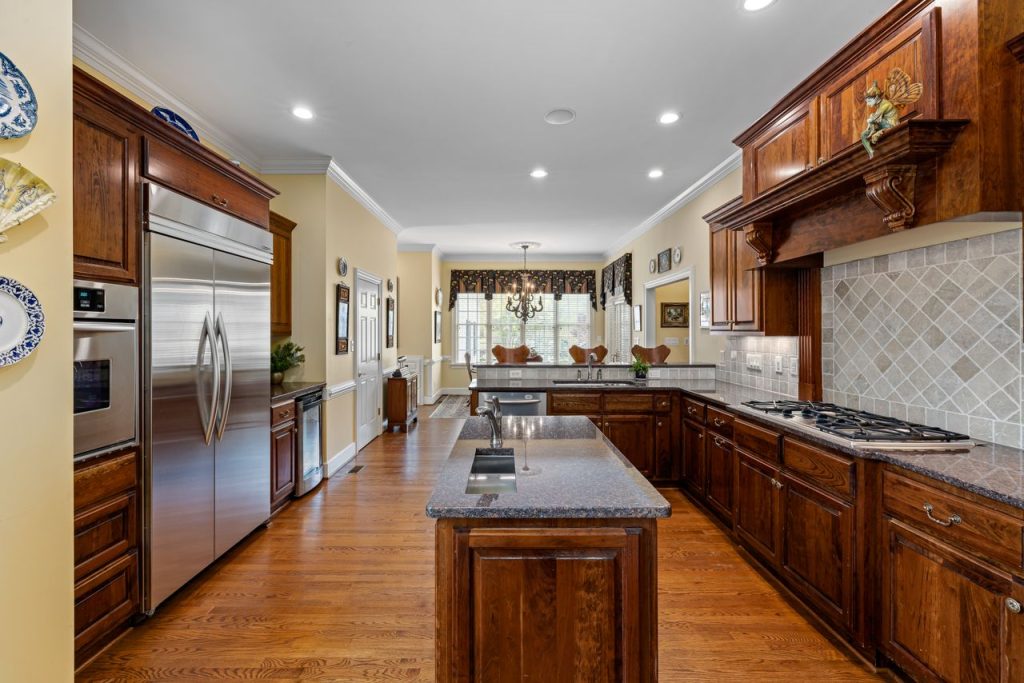
Most of the content on this topic treats “custom” as a guarantee of better design. It isn’t.
Custom cabinets can still produce wasted corners, awkward appliance clearances, insufficient drawer space, or storage that does not match how the homeowner actually uses the kitchen. Paying more for a cabinet that is made to fit does not automatically mean the kitchen has been designed intelligently. A poorly planned custom kitchen is just a more expensive version of the same mistakes.
I would often rather see a homeowner choose well-planned stock or semi-custom cabinets and use the savings on better installation, durable hardware, lighting, ventilation, countertops, or correcting underlying wall and floor problems. Those details affect daily use and long-term performance more than the word “custom” on the invoice.
There’s also a vocabulary problem in this industry. Some companies use “custom” to describe genuinely site-specific cabinetry built to exact dimensions. Others use it mainly as a premium sales category. A “custom” quote might mean the dimensions are made to order, or it might mean the finish is hand-applied, or it might mean you get a designer to help you pick from a catalog. These are not the same thing, and the price difference between them is enormous.
Homeowners should ask what is actually being customized: the cabinet dimensions, the materials, the finish, the storage accessories, or simply the design service. The answer changes the math completely.
Six Questions to Ask Before You Commit to a Quote
Whether you’re looking at stock, semi-custom, or custom, these are the questions I’d want answered before signing anything:
- What is included in the quote? Are fillers, end panels, toe kicks, trim, and hardware all covered, or are they extras?
- Who handles measuring and resolving uneven walls? Is that part of the installation, or is it a separate charge?
- How much installation and modification work is expected? If the answer is vague, ask them to walk through the specific problem areas in the room.
- Will the countertop, appliances, plumbing, or electrical work need changes? If yes, is that included or is it a separate contract?
- Does the layout provide the storage and clearances you actually need? Not what looks good in a rendering, but what you’ll use every day.
- Can you walk through the installed price breakdown line by line, so you can compare it fairly against another quote?
The Bottom Line
The goal is not to maximize the amount of custom work. It is to pay for custom work only where it solves a real problem.
Stock cabinets are the right choice when the room naturally accepts standard sizes. Custom cabinets are the right choice when the stock solution requires too many fillers, modifications, or compromises to work well. And the only way to know which one that is is to measure the space, plan the layout carefully, and compare the true installed cost — not the cabinet line item.
If you do that, you’ll find that the real cost difference between stock and custom is not the number on the price tag. It’s the cost of the problem you’re actually trying to solve.